Anime · Interview
Mayu and San in sailor uniforms side by side against a blue sky and sea.

Yukimitsu Ina & Hitomi Tateno × The Natural Aristocrat®

Cocoon

“The flowers fall. It literally evokes a life scattering away.”

Yukimitsu Ina · Director

Still: © Machiko Kyo (Akita Shoten) / NHK, NEP
Yukimitsu InaStudio Sasayurifrom the manga by Machiko Kyo1 hour 3 minutesSeptember 4 via GKIDS
By Nir Regev · The Natural Aristocrat® · Published on August 25, 2026 · Cocoon opens in U.S. theaters September 4Interview by Nir Regev · Published on August 25, 2026
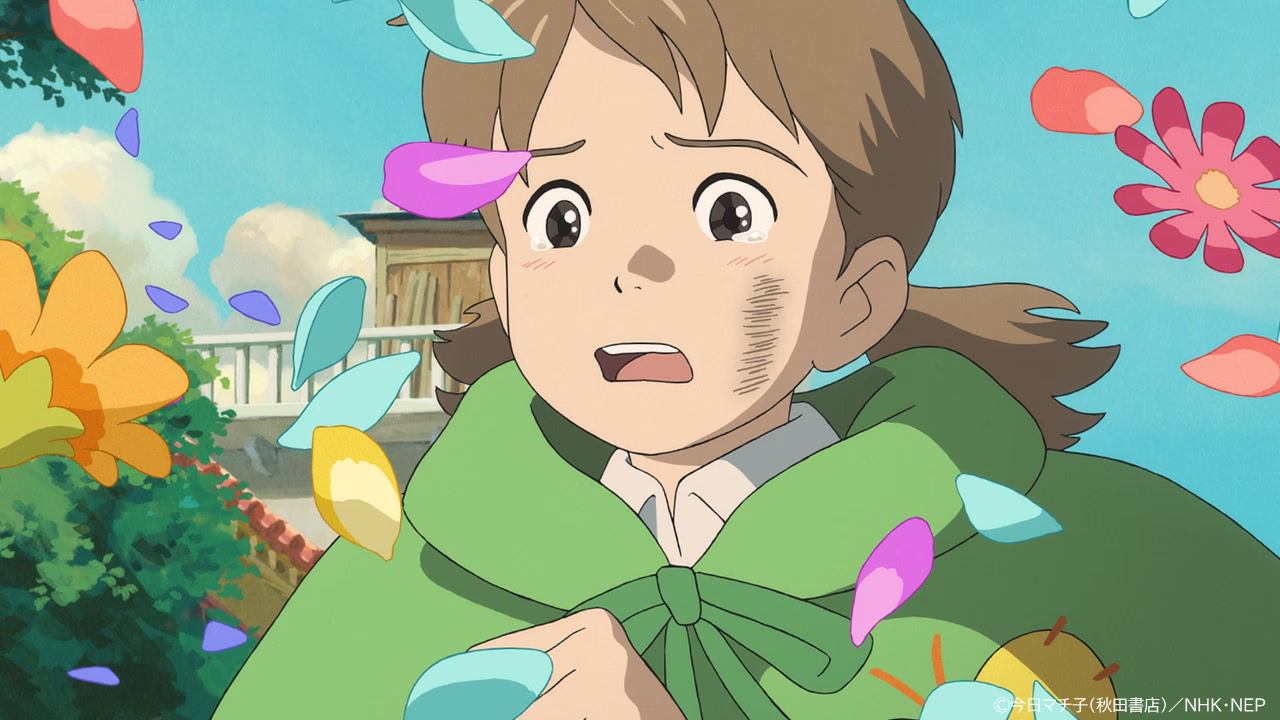
Ina Mayu crying as colorful flower petals swirl around her under a blue sky. & Tateno
on Cocoon — one
summer of girlhood
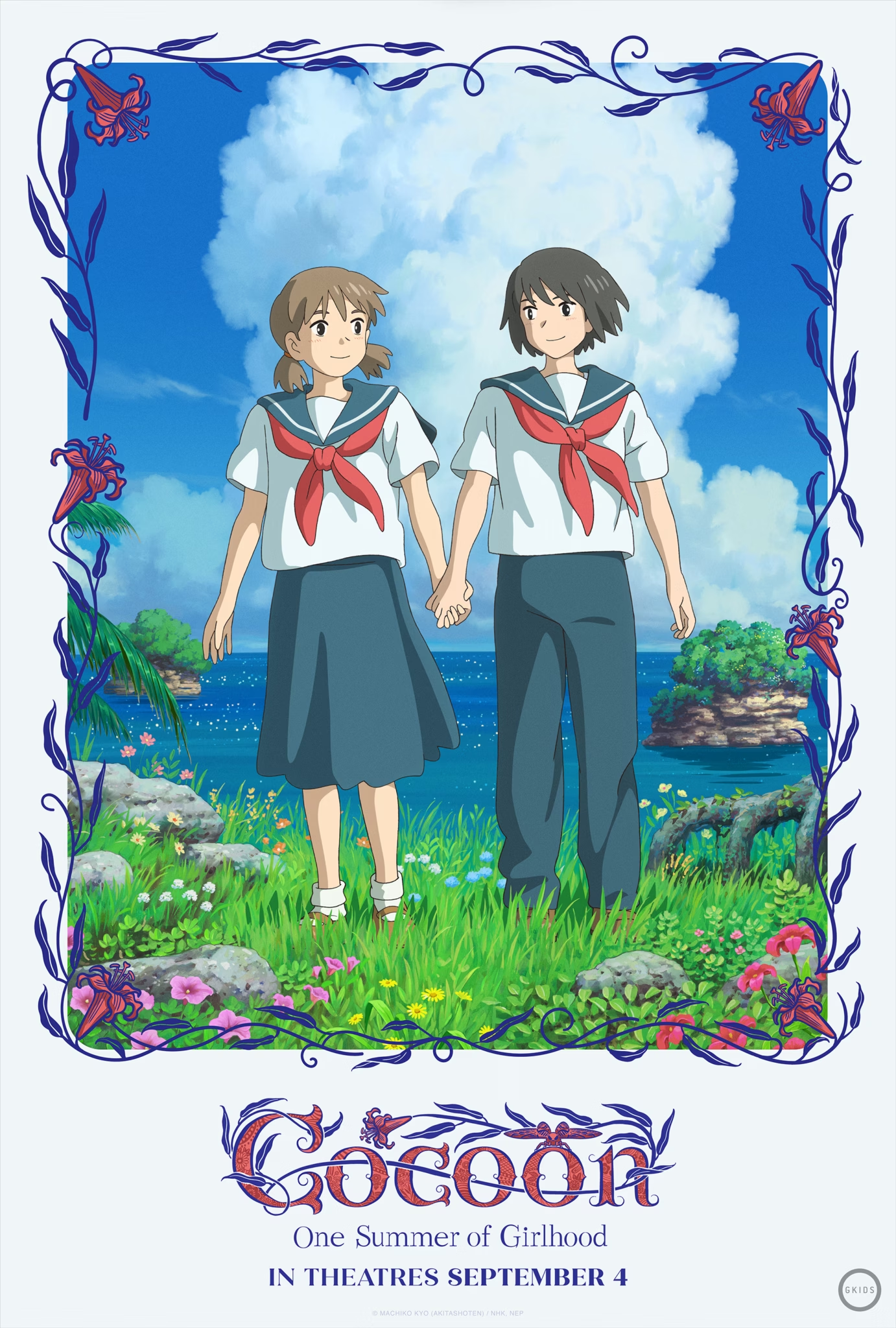
Poster for Cocoon - One Summer of Girlhood. San and Mayu hold hands on a flowered seaside cliff under towering clouds, framed by a border of lily vines.

Cocoon – One Summer of Girlhood. Credit: ©Machiko Kyo (Akita Shoten) / NHK, NEP

Interview: Director Yukimitsu Ina & Animation Producer Hitomi Tateno on Cocoon – One Summer of Girlhood

DirectorYukimitsu Ina
Animation ProducerHitomi Tateno
AnimationStudio Sasayuri
From the manga byMachiko Kyo
In theatersSeptember 4 · GKIDS

Interview: Director Yukimitsu Ina and animation producer Hitomi Tateno spoke with The Natural Aristocrat® about Cocoon – One Summer of Girlhood, their animated adaptation of Machiko Kyo’s manga cocoon, ahead of the film’s September 4 North American theatrical release via GKIDS. Ina, 29, directed the film from his own storyboards at Sasayuri, the studio Tateno founded after her long career as a Studio Ghibli animator.

01

“Flowers Instead of Blood”

a softer expressionE.T.hana ga chiru
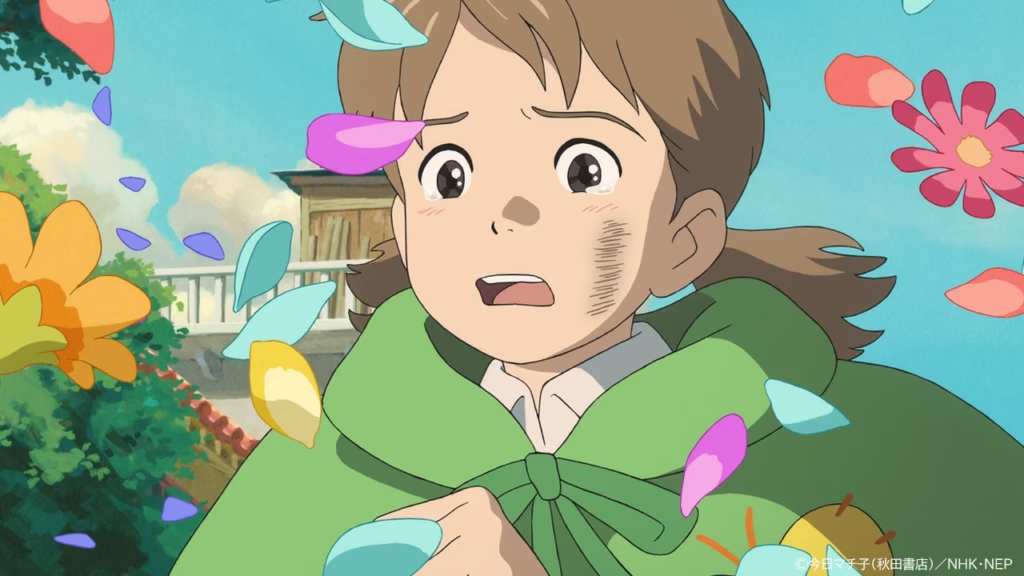
Mayu crying as colorful flower petals swirl around her under a blue sky.
CocoonPetals where the blood should be. Credit: ©Machiko Kyo (Akita Shoten) / NHK, NEP©Machiko Kyo (Akita Shoten) / NHK, NEP
THE NATURAL ARISTOCRAT (NIR REGEV)

How did the visual direction of flowers instead of blood originate?

YUKIMITSU INA

I wanted this film to be seen by my own generation and the generations below it. [Ina is 29.]

If we had animated the manga’s depiction of the war exactly as it is, with its grotesque, shocking passages, it would have become an even stronger expression, and I felt younger audiences wouldn’t be able to watch it, or would refuse to. So I was searching for a more approachable way to express it.

The hint, surprisingly, came from E.T. When E.T. loses his strength, the flower wilts. That film expresses the sense of life itself through a flower. I wanted to take that idea and amplify it physically, so that flowers themselves would express the blood.

In Japanese we have the expression “hana ga chiru,” the flowers fall. It literally evokes a life scattering away, so the image of falling petals and the image of a life being lost connect. And animation gives you that richness of color, so that’s how we expressed it.
Advertisement
Mayu crying as colorful flower petals swirl around her under a blue sky.
HITOMI TATENO

It’s the gore, really. I had a strong desire to soften it. But what could we do? Putting a blur over it would have felt flavorless. We wanted to make this for young people in their teens, and it was going to be broadcast on television first, so we needed a softer expression, something children could watch without averting their eyes.

I’m sure we weren’t the first ones to ever express it this way, but with flowers… girls tend to love flowers. Well, there may occasionally be one who doesn’t! By expressing those moments through flowers, I think we managed to create a kind of symbol of escape from the painful part of the scene.

Advertisement
02

Open to Interpretation

no restrictionswhy did it happenentrusted to the viewer
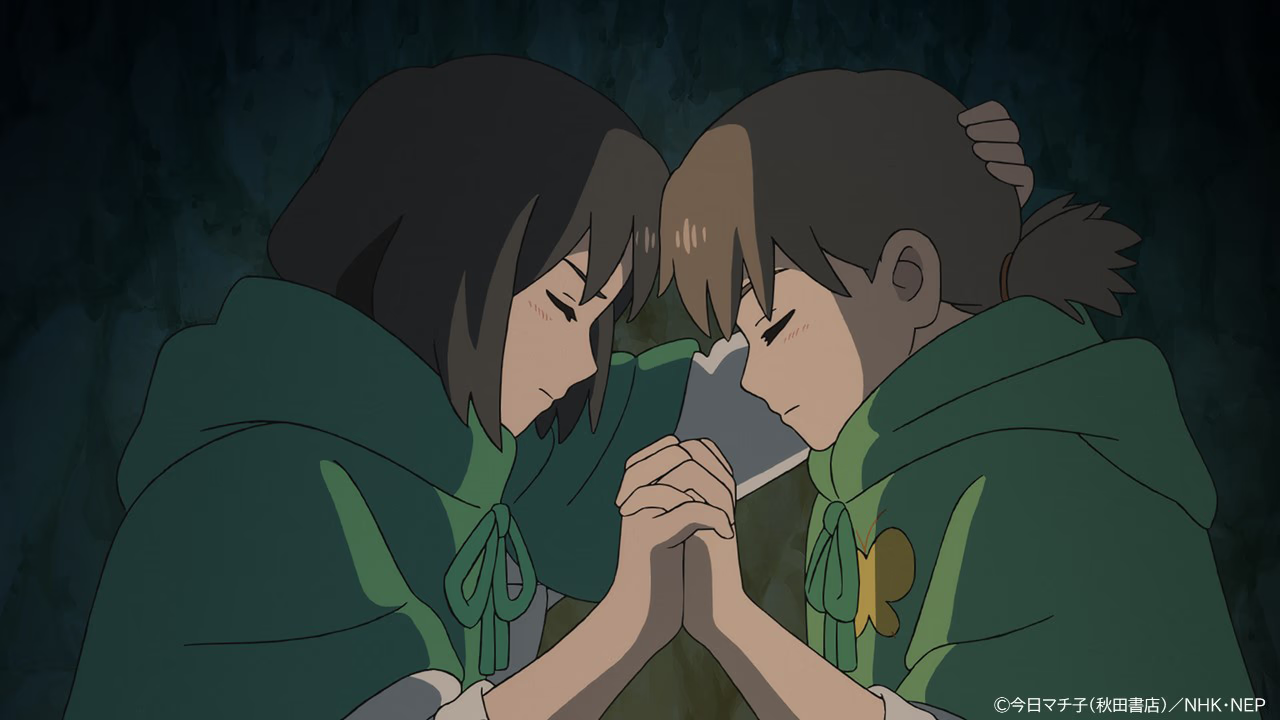
San and Mayu, eyes closed, foreheads together with hands clasped in a dark cave.
CocoonSan and Mayu, hand in hand in the dark. Credit: ©Machiko Kyo (Akita Shoten) / NHK, NEP©Machiko Kyo (Akita Shoten) / NHK, NEP
THE NATURAL ARISTOCRAT

There’s a scene where it seems a soldier is going to do something to San, and Mayu stops him. Is that one example where visual restraint was necessary or does it actually happen? Was it meant to be open to interpretation from the audience?

YUKIMITSU INA

I drew that scene without consciously putting any particular restrictions on it. Ultimately, the real question is why something like that happened at all. Had the soldier gone mad? Or was he not mad at all, and he simply did it? And what the victim felt in that moment is beyond anyone’s ability to measure. But we didn’t cut the scene. It’s from the original manga, and we didn’t want to take that away.

If anything, I deliberately wanted to keep a certain level of abstraction in how it’s expressed. I want to show you that sight, but honestly, I have no definitive answer for how it should be understood. There is nothing I can point to and say, “This is what that scene must convey.” How you receive it is something I want to entrust to the viewer. I’m genuinely curious how people will interpret it.

Advertisement
03

The Suddenness of Loss

an expanded roletsunderegone in an instant
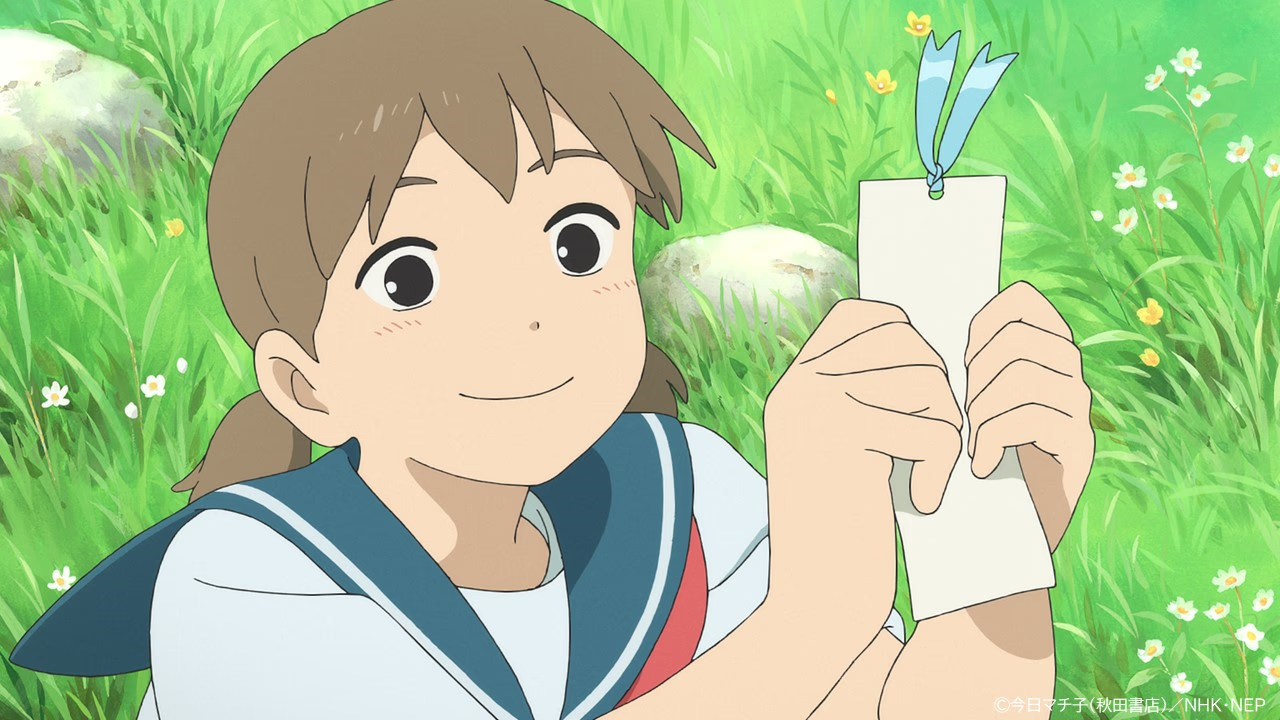
Mayu smiling in the grass while holding up a white bookmark tied with a blue ribbon.
CocoonThe birthday bookmark. Credit: ©Machiko Kyo (Akita Shoten) / NHK, NEP©Machiko Kyo (Akita Shoten) / NHK, NEP
THE NATURAL ARISTOCRAT

Can you describe the storyboarding of the traumatic Tamaki scene? I think that’s probably the strongest scene in the film.

YUKIMITSU INA

Tamaki is a character whose role we expanded for the animated version. She appears so much that it wouldn’t be an exaggeration to call her one of the main characters. Above all, she’s someone who quietly looks after San. It’s not the super-close friendship San has with Mayu. It’s the surprise of realizing that this person, of all people, is watching over you. When someone that brusque supports you, there’s something strangely calming about it.

In the story, San opens her heart to her, and Tamaki encourages her. But that very act becomes the trigger, and Tamaki dies. San ends up carrying the weight of believing her own actions caused Tamaki’s death, even though it’s truly a burden she doesn’t need to feel. Someone you were happily chatting with only yesterday is suddenly gone. Bringing out that suddenness, the way a person can simply vanish, was the thing I most wanted to depict in the scene of Tamaki’s death.

Advertisement
HITOMI TATENO

I didn’t give any input on the direction, but that is what Ina insisted on. To depict how shockingly fast a life can be taken away, how it can simply disappear, we actually needed to draw Tamaki as a genuinely charming character. She loves fashion, but she’s usually a little curt with people. In Japanese, and I think everyone knows the word by now, she’s a bit “tsundere.”

Because such a lovely girl has her life taken from her in an instant, you feel just how cruel and horrible war is. I believe that’s what the director wanted to express.

A war you can
receive as
your own

Ina kept the film deliberately unplaceable: the buildings blend countries, the vegetation blends regions, and even the soldiers are a collage of period equipment, so no single nation owns the story.

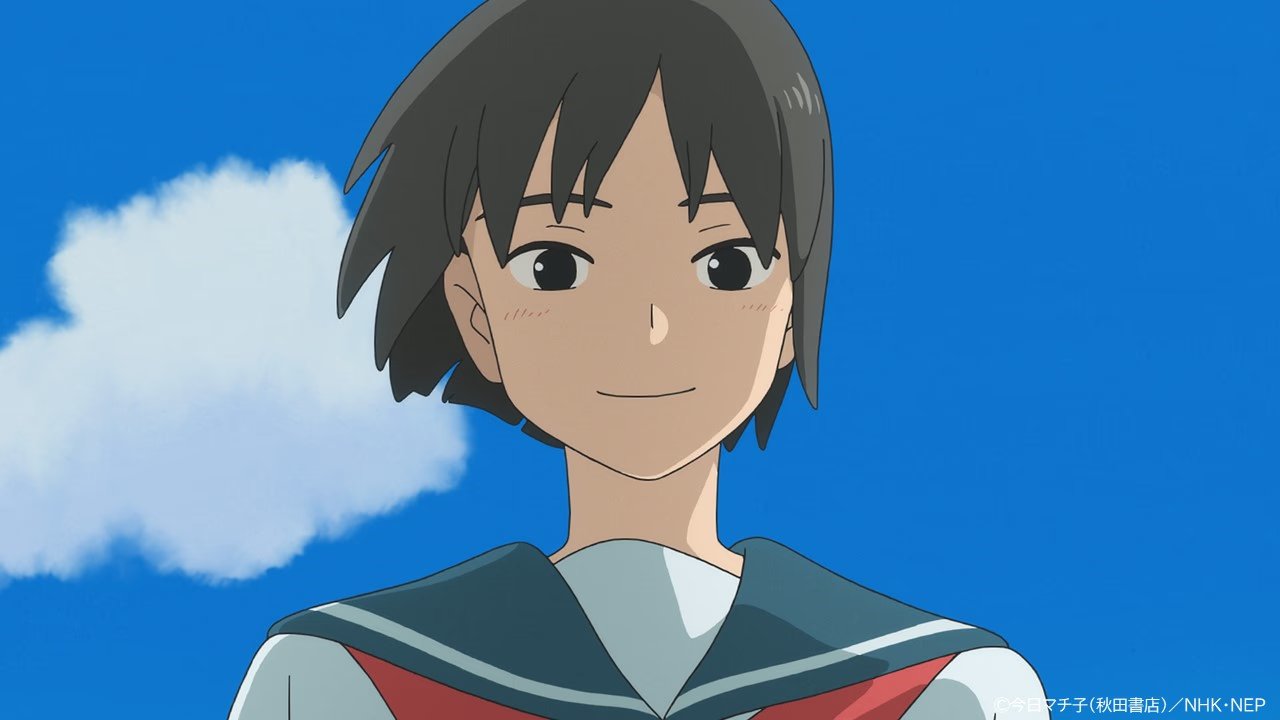
Close-up of San smiling against a bright blue sky with a single white cloud.The trailer · plays right here
“Whether you’re in America, or Europe, or anywhere else in the world, it’s a war you can receive as your own.”

Yukimitsu Ina · Director

© Machiko Kyo (Akita Shoten) / NHK, NEP

Advertisement
04

A Dream That Went Through

an offer from NHKa magnificent storyboardvividly alive
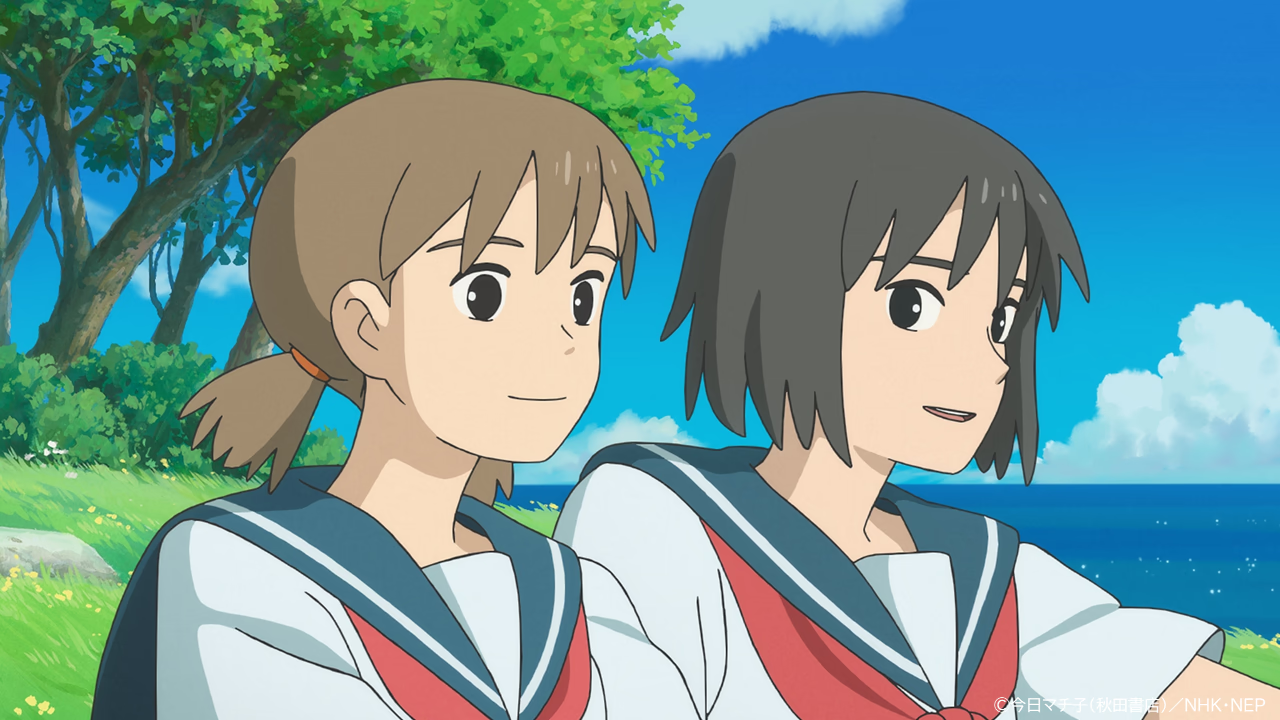
Mayu and San in sailor uniforms side by side against a blue sky and sea.
CocoonSan and Mayu, looking out to sea. Credit: ©Machiko Kyo (Akita Shoten) / NHK, NEP©Machiko Kyo (Akita Shoten) / NHK, NEP
THE NATURAL ARISTOCRAT

How did NHK become involved with this film?

HITOMI TATENO

The offer came to me first. Ms. Yagi came to us with the original manga, saying, “We would like to turn this work into animation.” I was the first to receive that inquiry. But at the time, I had completely stepped away from animation production, so I wondered what to do. Still, it was an offer they had brought to us.

Thinking, “We’re so inexperienced, I don’t know if we’re even qualified to take on such a wonderful, heavy work,” I went to Director Ina, who was working nearby, and asked, “Would you try reading this?” As it happened, Ina had been studying exactly that, drawing storyboards. He accepted my request, and what he drew was a magnificent storyboard. It’s a shame I can’t show it to you now. There’s a huge amount of it, and it was so fresh. It’s supposed to be the painful story of a war, and yet the girls in it were so vividly alive. Even though I was the one who brought it to him, I was stunned.

I thought, “This might actually get approved.” We submitted it, it truly was accepted, and the project went through. It’s a story that sounds like a dream, but every bit of it is true. That’s how it happened.

Advertisement
05

Anywhere in the World

anonymitya collage of countriesno single place
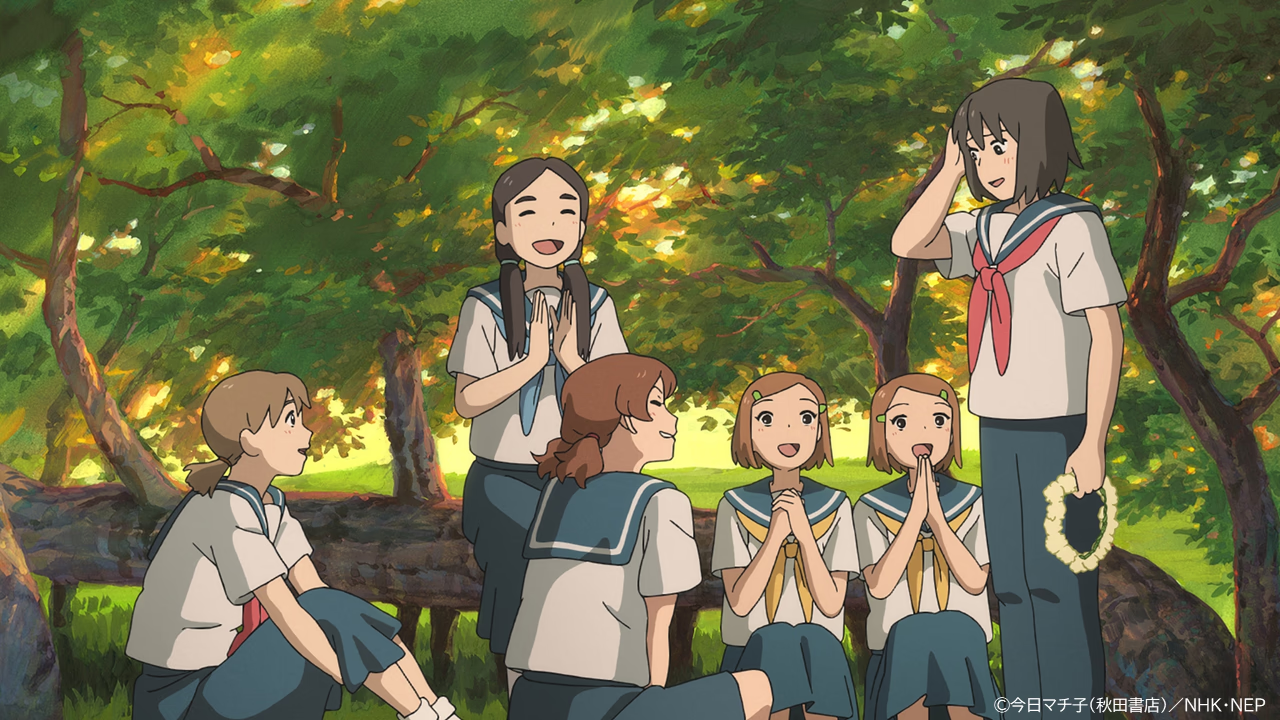
San stands holding a flower wreath as smiling classmates sit together under sunlit trees.
CocoonSan holds a flower wreath while her classmates gather beneath the trees in the anime film Cocoon – One Summer of Girlhood.©Machiko Kyo (Akita Shoten) / NHK, NEP
THE NATURAL ARISTOCRAT

There’s a disclaimer at the end of this film that says it’s a complete work of fiction, and so on. I was wondering, personally, do you want audiences to take it as fiction or as loosely based on Okinawan history? What’s the intention?

YUKIMITSU INA

The original manga is, I believe, loosely based on the Battle of Okinawa, but in fact even the manga never says so. It’s drawn with a certain anonymity. In the anime, I pushed that anonymity even further. I wasn’t trying to depict one specific battle at all. If anything, I strongly and deliberately kept it that way, so the film could be accepted more universally. Not Okinawa specifically. Whether you’re in America, or Europe, or anywhere else in the world, it’s a war you can receive as your own.

So the buildings that appear are a blend of architectural styles from various countries. The same goes for nature. We drew the vegetation of various regions, and the sky, so you can’t pin the story to one particular place. The characters, including their clothing, are also hard to place. Even the soldiers are expressed as a collage woven from the period equipment of various countries. Deliberately, there is no single country it’s meant to be.

Advertisement
06

One Last Question

yes or nothe circleshe might have
Close-up of San smiling against a bright blue sky with a single white cloud.
CocoonSan smiles against a blue sky in the anime film Cocoon – One Summer of Girlhood.©Machiko Kyo (Akita Shoten) / NHK, NEP
THE NATURAL ARISTOCRAT

In your view, would Mayu have joined the rest of the group who lost hope in the circle if San didn’t grab her hand?

YUKIMITSU INA

She might have.

The Makers
×
Director
Yukimitsu Ina
29 years olddrew his own storyboardsdebut feature
Animation Producer
Hitomi Tateno
Studio Ghibli veteranfounded Sasayuribrought the manga to Ina

Voice Cast

Marika Ito as SanHikari Mitsushima as Mayu
English DubLauren Kong as SanAnjali Kunapaneni as Mayu
Cocoon – One Summer of Girlhood

San: Marika Ito
Mayu: Hikari Mitsushima
San (English dub): Lauren Kong
Mayu (English dub): Anjali Kunapaneni

Advertisement

COCOON – ONE SUMMER OF GIRLHOOD

San and Mayu attend an all-girls school on a warm and tranquil island. When war reaches their shores, they are ordered to help nurse the wounded in a military hospital hidden away in a cave. Amidst escalating death and brutality, the friends struggle to find solace in their fragile lives.

Based on the manga by Machiko Kyo, cocoon – One Summer of Girlhood is the debut feature from Yukimitsu Ina and animation studio SASAYURI, founded by former Studio Ghibli animator Hitomi Tateno. The project brings together legendary veteran animators like Akihiko Yamashita and Shinji Otsuka, known for their work on PRINCESS MONONOKE and THE BOY AND THE HERON, with a new, young generation of animating talent. The film is a devastating yet beautiful plea for peace.

Director
Yukimitsu Ina
Animation
Studio Sasayuri
Animation producer
Hitomi Tateno
Based on
The manga cocoon by Machiko Kyo
Music
Kensuke Ushio
Starring
Marika Ito and Hikari Mitsushima
Run time
1 hour 3 minutes
U.S. release
September 4, 2026, in theaters via GKIDS

The Stills

Mayu crying as colorful flower petals swirl around her under a blue sky.
Art, Chapter 01
Flowers Instead of Blood
San stands holding a flower wreath as smiling classmates sit together under sunlit trees.
Art, The Wreath
San & Classmates
San and Mayu, eyes closed, foreheads together with hands clasped in a dark cave.
Art, Chapter 02
Hand in Hand
Mayu smiling in the grass while holding up a white bookmark tied with a blue ribbon.
Art, Chapter 03
The Birthday Bookmark

All stills © Machiko Kyo (Akita Shoten) / NHK, NEP

Read Next

Follow
Nir Regev
Follow The Natural Aristocrat® on social media
Article Copyright

All content on The Natural Aristocrat® is Copyright © 2016-2026 TheNaturalAristocrat.com. All rights reserved. This includes (but not limited to) ALL text in this article. All Cocoon – One Summer of Girlhood stills, key art, and posters are Copyright © Machiko Kyo (Akita Shoten) / NHK, NEP, and remain the property of their owners.

The Natural Aristocrat®