
Young Kafka and Mina on the hill above the burning town

Masaya Fukunishi & Yuta Bandoh × The Natural Aristocrat®

Kaiju No. 8

Press Conference Interview

“When you’re making it, you’re alone, and I don’t really have assistants. I’m in a small room facing it by myself.”

Yuta Bandoh · Composer

Still: ©JAKDF 3rd Division ©Naoya Matsumoto/SHUEISHA
Masaya Fukunishi · The Voice of KafkaYuta Bandoh · Composerfrom the manga by Naoya Matsumotoa Production I.G series
By Nir Regev · The Natural Aristocrat® · Published on October 5, 2026Interview by Nir Regev · Published on October 5, 2026
Kaiju No. 8 Season 2 teaser visual Fukunishi & Bandoh Kaiju No. 8 key visual
on Kaiju
No. 8
Kaiju No. 8 Season 2 teaser visual

Kaiju No. 8 Season 2 key visual. Credit: ©JAKDF 3rd Division ©Naoya Matsumoto/SHUEISHA

Interview: Kafka’s Voice Masaya Fukunishi & Composer Yuta Bandoh on Kaiju No. 8

The Voice of KafkaMasaya Fukunishi
ComposerYuta Bandoh
AnimationProduction I.G
From the manga byNaoya Matsumoto
DirectorsShigeyuki Miya & Tomomi Kamiya
Kaiju designMahiro Maeda · Studio Khara

The Interview

Interview: Masaya Fukunishi, the Japanese voice of Kafka Hibino, and composer Yuta Bandoh spoke with The Natural Aristocrat® about Kaiju No. 8 at a Javits Center press conference during Anime NYC 2026.

From the readers

Start the conversation
01

Episode 10, By a Mile

the highest firepowerpast my own limitthe AX live dub
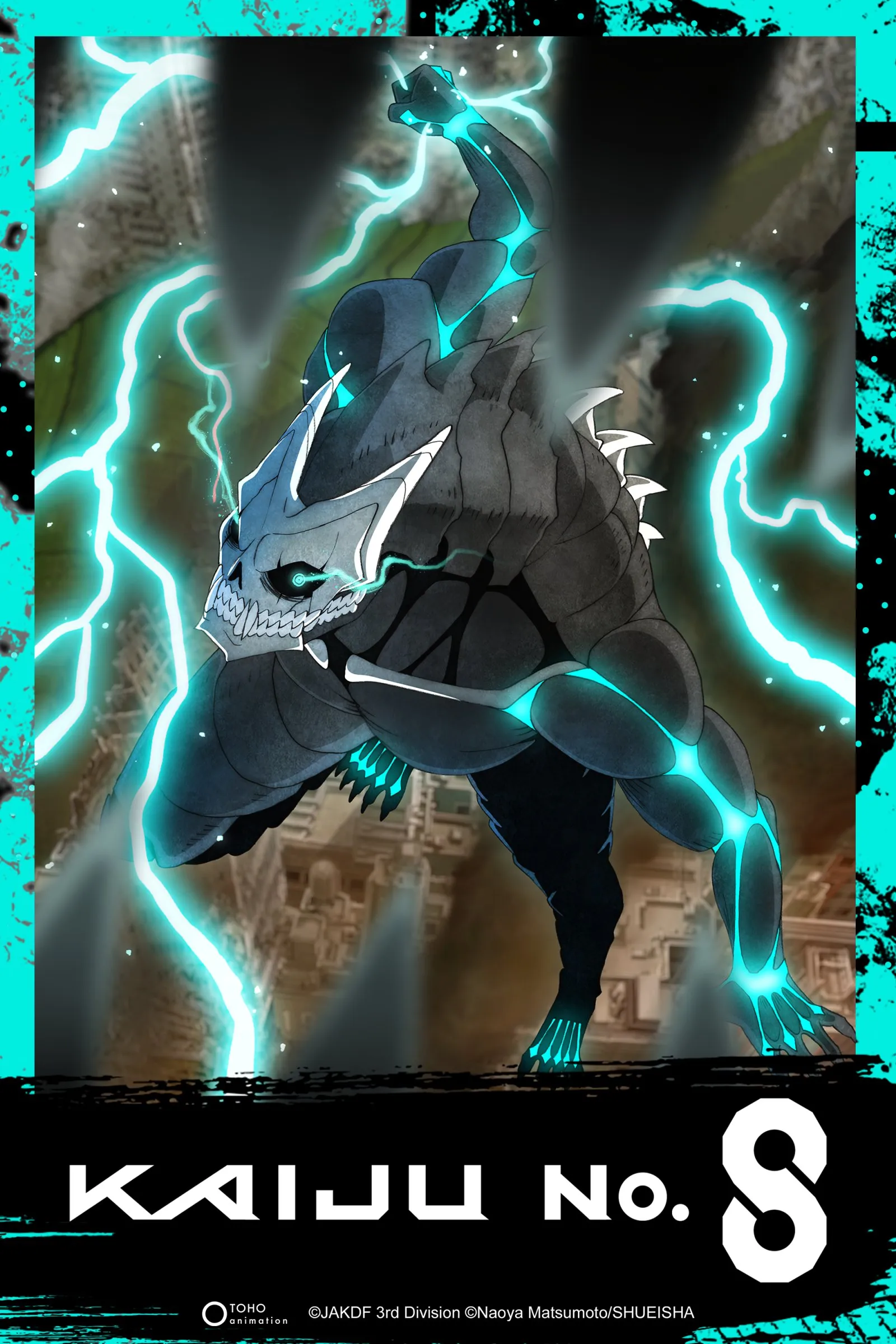
Kaiju No. 8 unleashed, wreathed in lightning
Kaiju No. 8Credit: ©JAKDF 3rd Division ©Naoya Matsumoto/SHUEISHA
THE NATURAL ARISTOCRAT (NIR REGEV)

To Masaya Fukunishi: Which Kafka scene has required the most vocal energy?

MASAYA FUKUNISHI

This one is decided by a mile. Episode 10, the punch scene.

It’s the symbolic scene where he casts off every thought and worry and clearly unleashes the highest firepower in the entire work.

To produce a voice worthy of that, I felt I would probably have to go past my own limit. I worked very hard at it. I wrung out everything I had.

Last year, at AX 2025, I actually did a live dub of this scene. We did the same scene in my Japanese version and in the English version by Nazeeh [Tarsha], Nazeeh first and then me. I have the memory of dubbing that same scene.

At first it was Nazeeh, and you can tell just from watching the show, he is enormously skilled and a person of real passion. And because that was put in front of me first, before my turn, I completely lost it. (laughs) And I did that live dub too, with truly several times more power than I thought I had in me.

Afterward the two of us embraced. It’s a hot memory. A symbolic scene at every turn.

Sorry for making you translate things like “buchi-gire.”

Advertisement
02

2.5 Million Yen of Synthesizers

aggressive and noisythe finest excusechasing Ushio’s rig
The transformation surge
Kaiju No. 8Credit: ©JAKDF 3rd Division ©Naoya Matsumoto/SHUEISHA
THE NATURAL ARISTOCRAT

To Yuta Bandoh: What sound or instrument best represents Kaiju No. 8?

YUTA BANDOH

Let me think. Rather than an instrument, I think it’s texture.

In terms of texture, probably something very aggressive and noisy. But with a little compression on it. And yet with an organic feel to it. I think maybe that’s what it is.

When I was making Kaiju, there’s something I haven’t talked about anywhere at all, which is that I bought a whole lot of synthesizers.

The image people have of me is that I use nothing but organic orchestral writing. But I really wanted to get my hands on synths. I bought about 2.5 million yen worth. (laughs)

We know each other well, so it’s fine to say. I have an acquaintance called Ushio, who has done a lot of Jump titles, and he owns an unbelievable number of synths. I saw it and wanted it. There’s no point competing with him. He has about five times what I have.

MODERATOR

I see. That’s a good excuse. (laughs)

MASAYA FUKUNISHI

The finest excuse for spending there is.

The orchestral writing is what makes such an impression. I was a fan of his from the start. I had that impression too. But when you open it up, the richness of the digital sound, I felt that too.

That he had gone and bought all that new gear is something I’m hearing for the first time too.

YUTA BANDOH

Film composers often show off their own studios. Hans Zimmer, for example, or Ludwig Göransson, they have tons of synths. Ludwig Göransson especially, with The Odyssey and so on, has a crazy amount of these.

So I really have to work hard at it.

MASAYA FUKUNISHI

Where are you working hard?

YUTA BANDOH

That was a behind-the-scenes story.

Advertisement
03

Small Animals Huddling Together

we met on the waypraising each otherbrothers, grown
Kafka and Reno at the fence
Kaiju No. 8Credit: ©JAKDF 3rd Division ©Naoya Matsumoto/SHUEISHA
ANIME CORNER (LUKE SO)

My first one’s for Fukunishi-san. So Hibino Kafka and Ichikawa Reno, they’re like brothers, but they haven’t seen each other since the season one finale. Do you have any memorable moments, like fun times with Wataru Kato-san?

MASAYA FUKUNISHI

Kafka and Reno haven’t seen each other in a while, but the truth is I ran into Wataru-kun, the voice actor, just now, right over there. We happened to meet on the way, by chance, so I felt a bit of destiny about it. That’s a story between me and Wataru, though, so let’s set it aside.

Around the time of season one, neither I nor Wataru-kun had many signature roles. We were both shallow in experience. So every time a recording session ended, we would actually praise each other, pointing out what was good in each other’s performance, and in doing that we eased each other’s anxiety.

Looking at it now, I think we were like small animals huddling together against the cold.

But time passed, season two has ended too, and we have become full-fledged voice actors, enough to meet again on foreign soil like this. I am enormously moved by that right now.

I think the ones who grow the most in the story are Kafka and Reno, and I feel that is, in a way, true of me and Wataru-kun as voice actors too.

Advertisement
04

Never Too Late, Kafka Says

the fear of aging, reducedfar from stable employmenta middle-aged protagonist
Kafka on the road in his cleaner days
Kaiju No. 8Credit: ©JAKDF 3rd Division ©Naoya Matsumoto/SHUEISHA
TEMPLE OF GEEK (JEFF)

So one of the themes of Kaiju No. 8 is that it’s never too late to chase your dreams. Has working on this series changed the way that either of you think about perspective or second chances in your own lives?

MASAYA FUKUNISHI

For me, I feel the negative feelings I had about aging clearly decreased through Kafka.

Doing this job as a voice actor, you really compete head on. Auditions where you have to win one single role, and that fight goes on forever. I think that is a life very far removed from stable employment.

Put the other way, no matter how hard you push yourself, I think it is not a profession that reaches ultimate stability, so I think there will absolutely come a time when you are at a low point.

Even so, like Kafka working at the Monster Sweeper company, you don’t cut corners even when you have ended up far from the self you dreamed of being. The hope was born in me that I could probably do that no matter where I ended up. I feel like playing him taught me that.

YUTA BANDOH

Rather than trying again, making the music for Kaiju No. 8 had a lot of firsts in it, so a lot of things were fresh for me. That’s where the “trying again” part sits, I suppose. As for perseverance, writing the whole score from scratch was genuinely hard, so it was a challenge too, and I would say I saw it through with tenacity.

And Matsumoto-sensei, of course, with second chances and so on. In the first season, it starts from that kind of place of defiance. And Kafka himself, for a Shonen Jump manga, is a middle-aged man, which is a fairly rare setup. That’s a big part of the appeal, and he’s close to my own age, so I feel a lot of sympathy for him.

At my age, I don’t really understand how a fifteen-year-old feels anymore.

Advertisement
05

A First Lead, Later Than Most

my first lead rolethe normal path, reversedconfidence in the technique
Kafka, determined
Kaiju No. 8Credit: ©JAKDF 3rd Division ©Naoya Matsumoto/SHUEISHA
PRESS (NADIA)

Like you mentioned before, anime protagonists tend to be younger than Kafka. What was it like to voice an older character?

MASAYA FUKUNISHI

As I said before, this was my first lead role to begin with. Generally, actors and voice actors basically build a career gradually, starting from young roles, and shift to older roles. That’s the normal path.

So this was a valuable experience other voice actors don’t get. I thought it might be a one and only experience, and I was tremendously excited about it.

Generally, most people who play a lead for the first time do it within about the first five years of a career. It took me longer than that. Which is to say I played him having stacked up a career, the same way Kafka himself had, so I could go in with real confidence in my technique, and I was very happy about that.

It’s a work I love and a big title, so there was that kind of nerves and unease. But I had no unease about the technique.

Advertisement
06

The Runtime Changes Every Week

the music’s time is fixedpraying it wouldn’t changea different gear
Helicopters over the city operation
Kaiju No. 8Credit: ©JAKDF 3rd Division ©Naoya Matsumoto/SHUEISHA
ANIME CORNER (LUKE SO)

This is for Bandoh-san. You mentioned the challenge of not wanting to silence the dialogue while blending the sound effects, dialogue and music for every scene. What was the most challenging soundtrack throughout the anime, and why?

YUTA BANDOH

Same as Fukunishi-san just said, I wasn’t anxious about the technique.

But this is a very technical thing to say. Quite honestly, the hardest part was that the runtime actually changes enormously, and having to adjust to that every single time was very hard.

Japanese animation has a really interesting quality, which is that multiple animators are drawing different scenes at the same time. And in the end, in editing, the parts that came out well get held longer. Naturally, when a good piece of animation comes in, they show plenty of it.

But with composing, the music’s time is already fixed. You’re building the rhythm toward landing an impact on this cut. And that’s Kafka, played by Fukunishi-san, and Reno, played by Kato-san, all the characters. Then on top of that it’s a combined technique with the sound effects.

So every time, especially with pieces played live where the tempo gradually shifts, and there were quite a lot of those, where the tempo rises along with the emotional voltage, I would wait for the final edit every week, really praying that it wouldn’t change.

MASAYA FUKUNISHI

It’s collaborative work, after all. The parts outside your own control, all you can really do is pray.

YUTA BANDOH

But when it goes well, the voltage and the comfort of the picture lock in perfectly. Everyone works hard for that. We pushed it to a level you can’t reach on a weekly anime, or rather, I think maybe we got there.

ANIME CORNER (LUKE SO)

Back then when you used to do live shows, I can’t imagine how much different the process or similar it could be.

YUTA BANDOH

Completely different. But lately, after Kaiju, I’ve done a lot of live action, and there too the sense of tempo and the feel of the air are completely different. So it’s not a question of which is better. It’s that the gear I’m using inside myself is different.

MASAYA FUKUNISHI

I think that’s talk even Japanese press interviews rarely draw out, so I think it’s a wonderful question.

PRESS

I learned something.

Advertisement
07

Still Walking the Dream Road

the number one dreampride as a professionala composer who talks
Kafka and Mina in the library, childhood
Kaiju No. 8Credit: ©JAKDF 3rd Division ©Naoya Matsumoto/SHUEISHA
TEMPLE OF GEEK (JEFF)

With Kaiju No. 8 approaching its finale, what has this journey personally meant for each of you?

MASAYA FUKUNISHI

It’s embarrassing to put it so dramatically, but I feel like I’m on a road where I’ve been having my dreams granted, continuously. Still walking the dream road.

(laughs) Of all the protagonists I read in the source material and wanted, from the bottom of my heart, to play, Kafka is overwhelmingly the number one. I do all kinds of work, but most of it is work I end up being allowed to do. But a character I wanted to play before the audition even came up, before any of it, that’s Kafka more than anyone.

Jeff, imagine it from your own position. To be able to hold the position you truly want, the position you most want in this world. It really makes you feel like you’re inside a dream for life.

Let me ask you back. If you could hold any job position in the world, what would you want to do?

TEMPLE OF GEEK (JEFF)

I already, I mean, I already live my dream.

MASAYA FUKUNISHI

It’s really the equal of being able to be any teacher, at any educational institution. So I’m in a dream state constantly.

My pride as a professional. My number one dream came true, so I don’t think I will lose my pride as a professional for the rest of my life.

And that reaching its final phase means the last stage of building a treasure that symbolizes my own life, completing one of the meanings of my being alive. That leaves me lonely. But there’s also the expectation that once I finish it I’ll be able to carry more confidence in myself. That’s where I am.

It’s that outrageous. I think of it with real feeling, that in my own eyes I’ve been doing something outrageous this whole time.

They’ve written it quite poetically. What did the journey mean to each of you?

YUTA BANDOH

This is a personal thing, but I hadn’t been invited into anime much. So it really had been a long time, and that made me happy. That’s one thing.

The other thing is, I think in Japan I’m the type nobody would ever expect to be scoring a Shonen Jump anime at all. That made me happy, because I’ve been reading it forever. That made me very happy.

In Japan I’m probably called the overly highbrow type.

What it turns out to have meant for me may be something I only work out from here. But I was allowed to take on all kinds of challenges, and being brought to New York like this, to be seen worldwide, is, I think, genuinely a happy thing. It was worth the challenge, and I’m glad of it.

MASAYA FUKUNISHI

A new mission has been born in me, which is that I have to do more to tell the anime industry that Bandoh-san is a hugely entertaining person.

He’s been talking this whole New York trip.

A composer who talks more than the voice actor. He’s a really fun person.

Advertisement
08

Alone in Small Rooms

countries I will never visitno assistantsit happens in a chain
The kaiju silhouette over the moonlit city
Kaiju No. 8Credit: ©JAKDF 3rd Division ©Naoya Matsumoto/SHUEISHA
PRESS

You mentioned fans around the world, but do you have anything to say to the fans who overall really enjoy your work?

YUTA BANDOH

So many people have watched it. And with the music, when I look at Spotify, people in all kinds of countries are listening. People in countries I will almost certainly never visit are listening to it, and I think that’s a really happy thing. When you’re making it, you’re alone, and I don’t really have assistants. I’m in a small room facing it by myself.

For that to reach so many different people is, I think, a happy thing. But I think that’s probably true of a lot of the people involved in this anime. It isn’t a stage. Each person faces it in their own small space and turns it into a result.

I think that’s probably true for Matsumoto-sensei on the original too. It’s a strange feeling, and it’s interesting, and it’s an honor.

MASAYA FUKUNISHI

Seriously, when you’re on stage all over the world, it happens in a chain. Oh, this country has this many fans too, this country has this many fans too, you’re watching this too, it’s you! I understand it completely.

Advertisement
09

Keren-mi, and Every Key on the Keyboard

not afraid to driftHiroaki Sato’s mixthe word that won’t translate
Kikoru in the petal-storm battle
Kaiju No. 8Credit: ©JAKDF 3rd Division ©Naoya Matsumoto/SHUEISHA
PRESS

This is for both Fukunishi-san and Bandoh-san. So as both the voice actor and the composer that work together to represent all the characters, but specifically this time Hibino Kafka, you started his journey off as keep a secret, afraid to lose humanity, now final battle. What’s the process like? Do you have any fun moments when you’re just filming all this together?

MASAYA FUKUNISHI

So from the angle of sound, you want to hear from the two of us.

In playing Kafka there was one element I treated as enormously important, which was not being afraid of drifting away from the character. High voice, low voice, loud voice, small voice, using them widely and differently depending on the scene. I held that as very important.

If you physically mapped the sounds Kafka makes onto a keyboard, I think you would see them spread across very wide octaves. Generally, and especially in playing an animation character, restricting your pitch is a very important thing. Generally speaking.

I deliberately broke that, and went at the dubbing that way.

I mentioned earlier having confidence in my technique. One step off and, when you’re switching between all those voices, there’s the danger that it stops sounding like the character. I thought I might be able to clear that, so I built it that way and really went for it.

But everything I’ve described up to now could not have been achieved by my own strength alone. As for whose strength counted most, there is someone Bandoh-san is also very deeply involved with, who has really looked after me. There’s a process called seion, conditioning the sound, and the person who does it is Sato-san, Hiroaki Sato-san. In the end I think his contribution was the largest of anyone’s.

YUTA BANDOH

This goes off topic slightly, but Kaiju has a very unusual process. The music mixing and the voice MA, sound mixer in English, the same person handles the whole thing and takes an enormous amount of time over it.

That person does the sound conditioning for every voice actor, Fukunishi-san included, in super fine detail, far beyond the usual. It’s done differently from regular anime, with the same technique you’d use on the vocals in a music mix.

MASAYA FUKUNISHI

However delicate the vocal expression is, he picks up all of it and turns it into sound you hear as dynamic, so the depth I was expressing is fully realized. That is not something you can achieve on every production.

I’m grateful to everyone who managed the sound side as a whole, starting with Sato-san. The recording staff too.

YUTA BANDOH

Ah, re-recording mixer. The post-production re-recording mixer, or sound mixer.

MASAYA FUKUNISHI

Sorry. I dragged Bandoh-san into that and went on too long.

YUTA BANDOH

Unlike Fukunishi-san, I’m writing Kafka of course, but I think the composer’s position is one where you have to think about the whole story, not Kafka alone. Of course, Kafka is an important protagonist, so I think that matters.

The appeal of Kaiju No. 8, in Japanese, is what you’d call keren-mi. There’s no keren-mi in English, is there? Keren-mi is hard, sorry. The nuance is difficult.

Keren-mi is really difficult. Kabuki has keren-mi in it too. In a sense, it might be a term the whole country shares.

It has to be made to look cool. I think a lot of Shonen Jump works have keren-mi in them. For example, in Japanese manga, you draw the story carefully and then at the very end there’s the spread, that coolness, and I think that’s one form of manga’s keren-mi.

Anime adapts that to the full as well, or rather, I think it’s there too, so I think it’s something you have to take seriously.

Because I grew up in Japan as a boy with plenty of Jump, I have some sense of what I found exciting when I was reading it. I hold on to that.

It’s like connecting that sensibility to my own technique.

MASAYA FUKUNISHI

I felt that very strongly just now. The dubbing, on the stage we just did, we did a live dub just now. When I’m acting, the music of course comes afterward, so I never even thought about it. This time the order was reversed and the music was already there.

And I thought, you put the music where it feels damn good, don’t you?

What you’re saying now is, in short, keren-mi in direction. It’s hard to translate, but maybe one way to put keren-mi in art is that it feels damn good. Direction that feels incredibly good, the kind that gives you goosebumps. Hearing him talk about it, I felt that he has splendidly sublimated shonen manga’s direction into music.

Kafka’s feelings too, I think there are so many pieces of music that really express them.

YUTA BANDOH

It might be difficult, but I think keren-mi really is an important part of Japanese anime, especially Shonen Jump. I’d like somebody to research it.

MASAYA FUKUNISHI

Making a scene that leaves an impression on the viewer, and finishing it so it really is impressive, I think that’s really important.

It’s hard. Me too, I tried to translate it, and it doesn’t sit right.

YUTA BANDOH

This may be a more traditional way to put it, but kabuki has the mie. Like stop motion. Space and time change in that one place. Maybe that’s close to what we were talking about. But I don’t know where it came from. I’m not a researcher.

It may not be that the manga artists are conscious of doing it. It’s like an aesthetic sense they follow unconsciously.

Advertisement
10

The Rival

close to obsessionit pissed me the hell offacross countries and languages
Kaiju No. 8 rising against a crimson sky
Kaiju No. 8Credit: ©JAKDF 3rd Division ©Naoya Matsumoto/SHUEISHA
PRESS (NADIA)

Has the love of Kafka in your portrayal of him surprised you at all?

MASAYA FUKUNISHI

I said this earlier, but it’s the position I have craved most in my life. My attachment to it is enough to frighten me. I don’t want to hand him to anybody. It’s a little close to obsession.

So the English version I mentioned before, performed ahead of me, was wonderful, and it pissed me the hell off. That’s the thing that surprised me.

It’s something that should be praised, and as someone who loves the same character, the same work, there could be nothing better. And yet at the time I was annoyed enough to think I would definitely surpass him. That is how fine a performance it was.

But the other surprise was that Nazeeh, career-wise, was in a similar place to me. It was his first time playing a lead as well. But after that he took off. He’s in this, and this, and this. He really took off. He got found. That surprised me.

I think he’ll go on being my rival.

YUTA BANDOH

That’s great. A rival across countries and languages.

MASAYA FUKUNISHI

It’s kind of rare. It feels rare enough that it might never come again.

a whole lot
of
synthesizers

Bandoh bought about 2.5 million yen of synths for this score, against his public image as an orchestral composer. The recorder hit its one-hour limit in the middle of the sentence; the second file picks it up without losing a word.

Kaiju No. 8 stillWatch the official trailer
“The image people have of me is that I use nothing but organic orchestral writing. But I really wanted to get my hands on synths.”

Yuta Bandoh · Composer

©JAKDF 3rd Division ©Naoya Matsumoto/SHUEISHA

The Season in 30 Frames

The kaiju face at the night window
Mina against the burning sky
Hoshina and the blade
Kikoru and Hoshina in the corridor
The armored kaiju in close-up
The red-eyed kaiju in the dark
Kafka and the little kaiju
The kaiju silhouette over the moonlit city
The suppression squad moves in
The transformation surge
Kikoru in the petal-storm battle
Mina Ashiro under the moon
The mushroom kaiju field
The armored kaiju looms
Kaiju No. 8 rising against a crimson sky
Wings over the burning sky
The crater from above
Wreckage rig against the sky
Kafka mid-fight in the ruins
Kafka’s wide-eyed resolve
The lone figure in the ruined street
Mina in the burning city
Kaiju No. 8 and the blue light
Kafka and Mina in the library, childhood
Helicopters over the city operation
Two children watch the smoke
Mina at sunset
The moonlit bridge
Kafka and Reno at the fence
Two silhouettes against the sunburst

All stills provided for press by the production. ©JAKDF 3rd Division ©Naoya Matsumoto/SHUEISHA

The Makers
×
The Voice of Kafka
Masaya Fukunishi
his first lead role in a seriesthe Episode 10 live dub at AX 2025calls the English Kafka his rival
Composer
Yuta Bandoh
scored Belle, Japan Academy Prize for Best Musicleads the orchestra Ensemble FOVEwrote the whole Kaiju score from scratch
The kaiju face at the night window

Voice Cast

Masaya Fukunishi as KafkaWataru Kato as Reno
Music · Yuta BandohKaiju design · Mahiro Maeda
Kaiju No. 8

Kafka Hibino: Masaya Fukunishi / Nazeeh Tarsha (English dub)
Reno Ichikawa: Wataru Kato
Mina Ashiro: Asami Seto
Kikoru Shinomiya: Fairouz Ai
Soshiro Hoshina: Kengo Kawanishi

Japanese cast, with the English dub lead. Simulcast worldwide.

KAIJU NO. 8

Adapted from Naoya Matsumoto’s manga, serialized on Shonen Jump+ (Shueisha). Directed by Shigeyuki Miya and Tomomi Kamiya at Production I.G, with character design by Tetsuya Nishio, kaiju design by Mahiro Maeda and Studio Khara, and music by Yuta Bandoh.

Season one aired in 2024 with series composition by Ichiro Okouchi; season two followed in 2025 with composition by Yuichiro Kido. Fukunishi’s Kafka is his first lead role in a series, and Bandoh scored the show entirely to picture.

The Voice of Kafka
Masaya Fukunishi (his first lead role in a series)
Music
Yuta Bandoh, scored entirely to picture
Animation
Production I.G
Directors
Shigeyuki Miya and Tomomi Kamiya
Series composition
Ichiro Okouchi (season one) · Yuichiro Kido (season two)
Based on
The manga by Naoya Matsumoto, serialized on Shonen Jump+ (Shueisha)
Kaiju design
Mahiro Maeda and Studio Khara
Streaming
Simulcast worldwide on X · streaming on Crunchyroll
Follow
Nir Regev
Follow The Natural Aristocrat® on social media

The Lobby

The conversation after the interview
Article Copyright

All content on The Natural Aristocrat® is Copyright © 2016-2026 TheNaturalAristocrat.com. All rights reserved. This includes (but not limited to) ALL text in this article. All Kaiju No. 8 stills, key art, and posters are Copyright ©JAKDF 3rd Division ©Naoya Matsumoto/SHUEISHA, and remain the property of their owners.

The Natural Aristocrat®